Progressive vs Bifocal Lenses: Complete Guide for Bangladesh
If you’re over 40 and struggling to see both near and far with one pair of glasses, your eye doctor has likely recommended progressive lenses or bifocal lenses. Both correct vision at multiple distances — but they work very differently. Choosing the wrong type can cause months of frustration.
This complete guide compares progressive vs bifocal lenses for Bangladesh users — covering how they work, who should use each, prices, and how to get the best fit for your lifestyle. Nine Optic specializes in Essilor, Zeiss, and Hoya progressive lenses in Bangladesh.
1. What Are Bifocal Lenses?
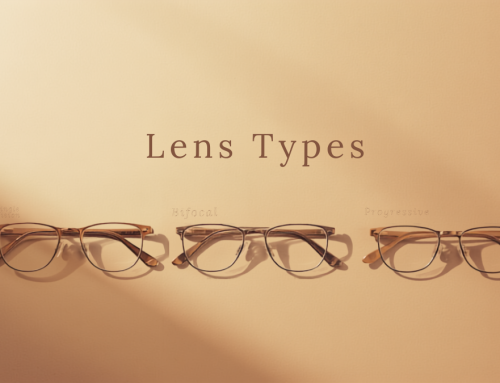
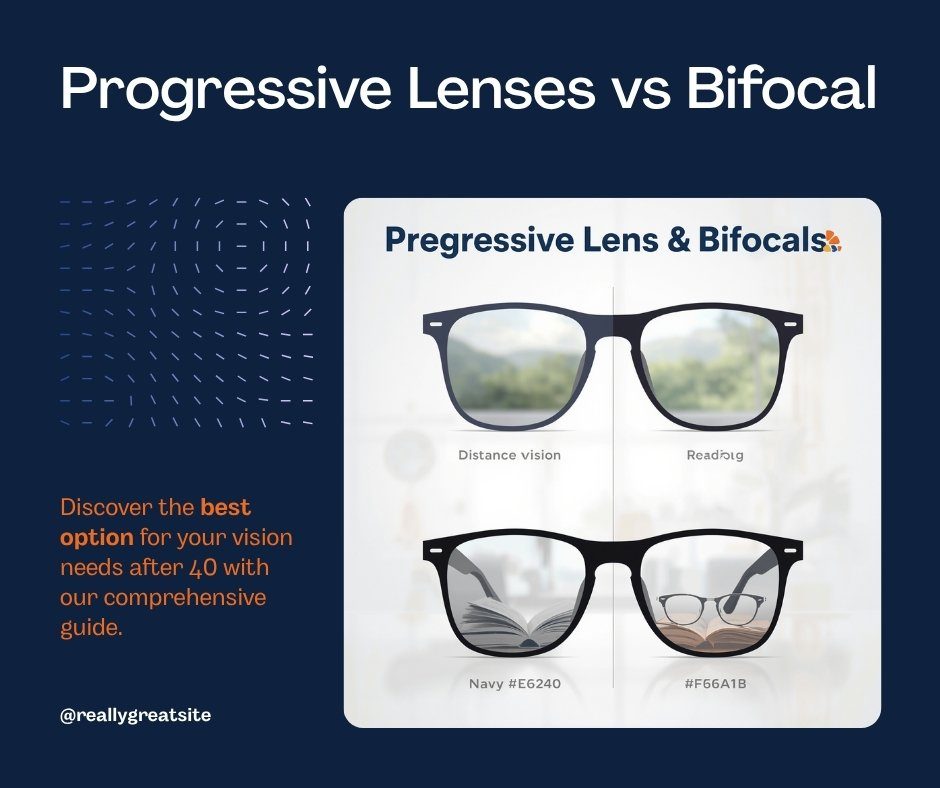
Bifocal lenses have two distinct vision zones separated by a visible horizontal line. The upper portion (larger area) is for distance vision. The lower portion is for near vision — reading, phone use, and close work. Bifocals were invented by Benjamin Franklin and have been used for 200+ years. They’re a proven, reliable solution for presbyopia. The visible dividing line is the most common complaint.
2. What Are Progressive Lenses?
Progressive lenses — also called no-line bifocals or multifocal lenses — provide three vision zones in one seamless lens: distance (top), intermediate (middle), and near (bottom). There’s no visible line. Your eyes naturally transition to the correct zone as you adjust your gaze. The intermediate zone handles mid-range vision like computer screens — a key advantage over bifocals for today’s multi-screen lifestyle in Bangladesh.
3. How Do Progressive Lenses Work?
Progressive lenses use a gradual power change across the lens surface — from full distance power at the top to full near power at the bottom, with intermediate power in the middle. To use them correctly: look straight ahead for distance, lower your gaze slightly for screens, and lower more for reading. Moving your head (not just your eyes) is the key technique that takes 1–2 weeks to master.
4. Progressive vs Bifocal: Key Differences
| Feature | Progressive Lenses | Bifocal Lenses |
|---|---|---|
| Visible line | No line (seamless) | Visible dividing line |
| Vision zones | 3 (distance, intermediate, near) | 2 (distance, near only) |
| Computer screen use | Excellent (intermediate zone) | No intermediate zone |
| Adaptation time | 1–4 weeks | Few days |
| Aesthetics | Modern, invisible | Line visible to others |
| Price BD | BDT 6,000–25,000 | BDT 3,000–8,000 |
| Best for | Office workers, all-day wear | Budget-conscious, readers |
5. Who Should Choose Progressive Lenses?
Progressive lenses are the better choice if you: work on a computer (the intermediate zone is essential), care about aesthetics (no visible line), frequently switch between distances, drive regularly, and want one pair for all activities. Progressives are recommended for most office workers and active adults in Bangladesh entering the presbyopia stage (usually around age 40–45).
6. Who Should Choose Bifocal Lenses?
Bifocals remain an excellent choice if you: have a tight budget (40–60% cheaper than progressives), mainly need reading glasses but also require distance correction, find it difficult to adapt to progressive lenses after trying, or have tasks requiring long periods of focused near or distance vision. Bifocals are reliable, durable, and get the job done simply.
7. Progressive Lens Price in Bangladesh
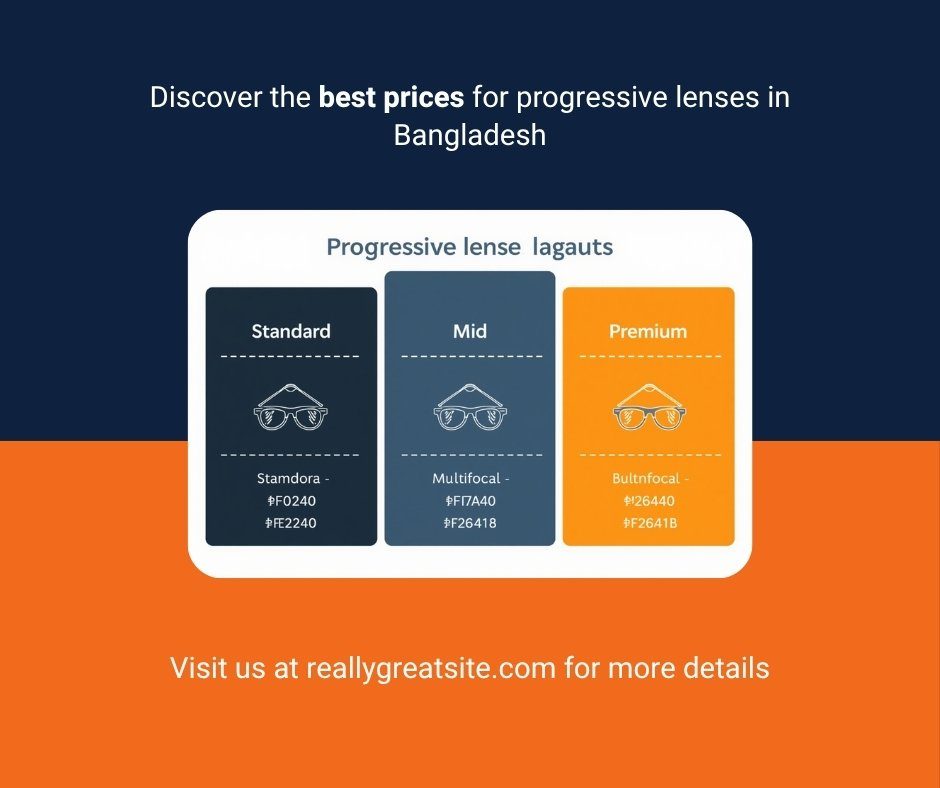
Basic progressive lenses: BDT 6,000–9,000. Hoya progressive lens price in Bangladesh: BDT 7,000–15,000. Essilor Varilux price in Bangladesh: BDT 9,000–18,000 per pair. Zeiss Individual Progressive: BDT 12,000–25,000+ per pair. Avoid very cheap “progressive” lenses under BDT 5,000 — they often have narrow corridors and poor peripheral vision making adaptation very difficult.
8. Adapting to Progressive Lenses: Tips for Bangladesh Users
The most common reason people give up on progressives is improper fitting or cheap lenses. Tips for successful adaptation: wear them full-time from day one, move your head — not just your eyes — when searching for clarity, start wearing at home before using for driving, and be patient for the first 2 weeks. If you experience severe dizziness beyond 4 weeks, revisit your optician to check the fitting parameters.
9. What to Tell Your Optician When Ordering Progressives
For accurate progressive lens fitting, your optician needs: complete prescription including ADD power, your PD (monocular PD for left and right separately is better), fitting height (measured with frame on your face), your primary use case (computer, driving, reading), and frame measurements. At Nine Optic, we guide every customer through these measurements when ordering progressive lenses online in Bangladesh.
10. Our Recommendation: Progressive or Bifocal for Bangladesh?
For most working adults in Bangladesh, progressive lenses are the better investment. They handle all three vision distances, look modern, and are compatible with the multi-screen lifestyle of office workers and professionals. If budget is a primary concern and your prescription is straightforward, bifocals remain a valid option. Most importantly, get fitted properly by a qualified optician with an accurate current prescription.
👉 Order progressive lenses in Bangladesh from Nine Optic — original Essilor, Zeiss, and Hoya with expert fitting consultation.
Frequently Asked Questions
What is the difference between progressive and bifocal lenses?
Bifocal lenses have two distinct zones — distance on top, reading at bottom — with a visible line. Progressive lenses have three seamless zones (distance, intermediate, near) with no visible line.
Who needs progressive lenses in Bangladesh?
Anyone over 40 who needs both distance and reading correction. They’re ideal for office workers, drivers, and anyone who switches frequently between near and far tasks.
What is the price of progressive lenses in Bangladesh?
Progressive lens price in Bangladesh ranges from BDT 6,000 to BDT 25,000 per pair depending on brand (Essilor, Zeiss, Hoya) and lens index.
Are bifocal lenses still good in 2026?
Yes, bifocals remain a practical, affordable option — especially for people who find progressive lenses difficult to adapt to, or who have a limited budget.
How long does it take to adapt to progressive lenses?
Most people adapt within 1–2 weeks. Some may need up to 4 weeks. Avoid driving until fully comfortable. If discomfort persists after 4 weeks, consult your optician.
Can I get progressive lenses online in Bangladesh?
Yes. Nine Optic offers progressive lenses online. Upload your prescription (including ADD power and PD), choose your frame, and we’ll craft your lenses with precision fitting.
What is the ADD power needed for progressives?
ADD power ranges from +0.75 to +3.50. Your eye doctor determines the correct ADD based on your age and near vision needs. Always use a current prescription.
Which is better — progressive or separate reading glasses?
Progressive lenses are more convenient — one pair covers all distances. Reading glasses are cheaper but require carrying multiple pairs. For professionals, progressives are generally preferred.
Share This Story, Choose Your Platform!
About the author : Dr. Asifur Rahman

Senior Consultant, Bangladesh Eye Hospital, Dhaka