Single Vision vs Progressive vs Bifocal Lenses (কোনটি আপনার জন্য?)
When you order new lenses, you’ll be asked to choose a lens type — and for many people that’s the most confusing part. Single vision, bifocal, or progressive? Each solves a different problem. Here’s a clear, simple guide to the three main types (তিন ধরনের লেন্স) so you can pick the right one with confidence.
Single vision lenses
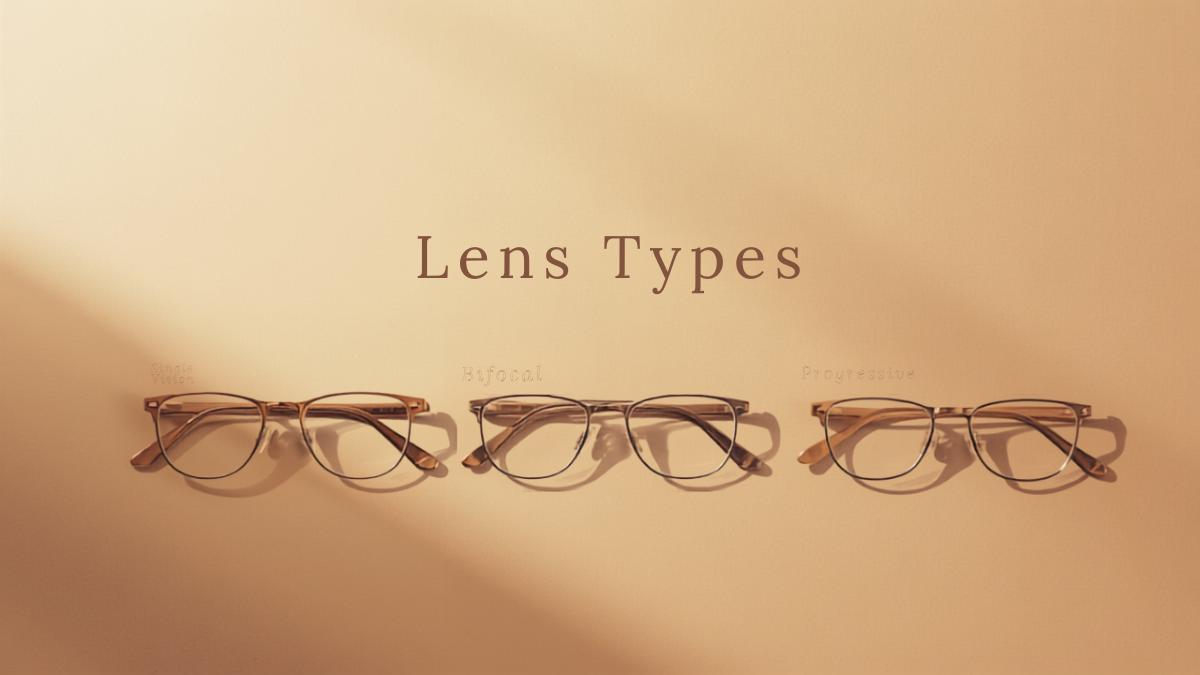
The most common type. A single vision lens has one power across the whole lens, correcting vision at a single distance — usually for seeing far away, or a dedicated pair for reading. If you have one prescription and don’t yet need help at multiple distances, this is your lens. একক দৃষ্টির লেন্সই সবচেয়ে সাধারণ।
Bifocal lenses
A bifocal lens packs two powers into one lens, with a visible line dividing them: the top for distance and a small segment at the bottom for reading. They’re practical and affordable for people who need both, but the sudden jump at the line takes some getting used to, and there’s no “in-between” (arm’s-length) focus.
Progressive lenses
A progressive lens gives you near, middle, and far vision that blend smoothly, with no visible line. They look like normal glasses and handle everything from your phone to the computer to the road. They cost more and need a short adjustment period, but for all-day, all-distance vision they’re the most convenient choice. Learn more in our progressive vs bifocal guide.
Quick comparison
| Lens type | Distances | Line? | Best for |
|---|---|---|---|
| Single vision | One | No | One prescription (far or near) |
| Bifocal | Two (near + far) | Yes | Budget-friendly near + far |
| Progressive | Near, middle & far | No | Seamless all-day vision |
বাংলায়: এক পাওয়ারের জন্য সিঙ্গেল ভিশন, কাছে-দূরে দুটোর জন্য বাইফোকাল, আর দাগ ছাড়াই সব দূরত্বে পরিষ্কার দেখার জন্য প্রগ্রেসিভ লেন্স সবচেয়ে ভালো।
Which is right for you?
If you’re young or have a single prescription, single vision is usually all you need. Once presbyopia sets in after 40 and you struggle with both near and far, bifocals or progressives come into play — and most people prefer the seamless look and feel of progressives. If you mainly need help reading, a good pair of reading glasses may be enough.
Getting used to progressives
Give yourself a week or two. Wear them full-time, point your nose towards what you want to see, and use the lower part of the lens for reading. The adjustment quickly becomes second nature.
Not sure which to choose? Nine Optic’s free home try-on lets you get expert guidance and try frames at home, with cash on delivery.
Frequently Asked Questions
What is the difference between bifocal and progressive lenses?
Bifocals have two powers separated by a visible line, while progressives blend near, middle and far vision smoothly with no line and a more natural look.
Are progressive lenses worth the extra cost?
For most people who need multiple distances, yes. They offer seamless all-day vision and look like ordinary glasses, though they need a short adjustment period.
Can I use single vision lenses for both reading and distance?
Not at the same time. Single vision lenses correct one distance, so you’d need separate pairs — which is why many people move to bifocals or progressives.
Do progressive lenses take time to get used to?
Usually one to two weeks. Wearing them full-time and turning your head towards what you look at speeds up the adjustment.
Share This Story, Choose Your Platform!
About the author : Dr. Saifur Rahman

Senior Consultant, Uttara Eye Hospital, Dhaka