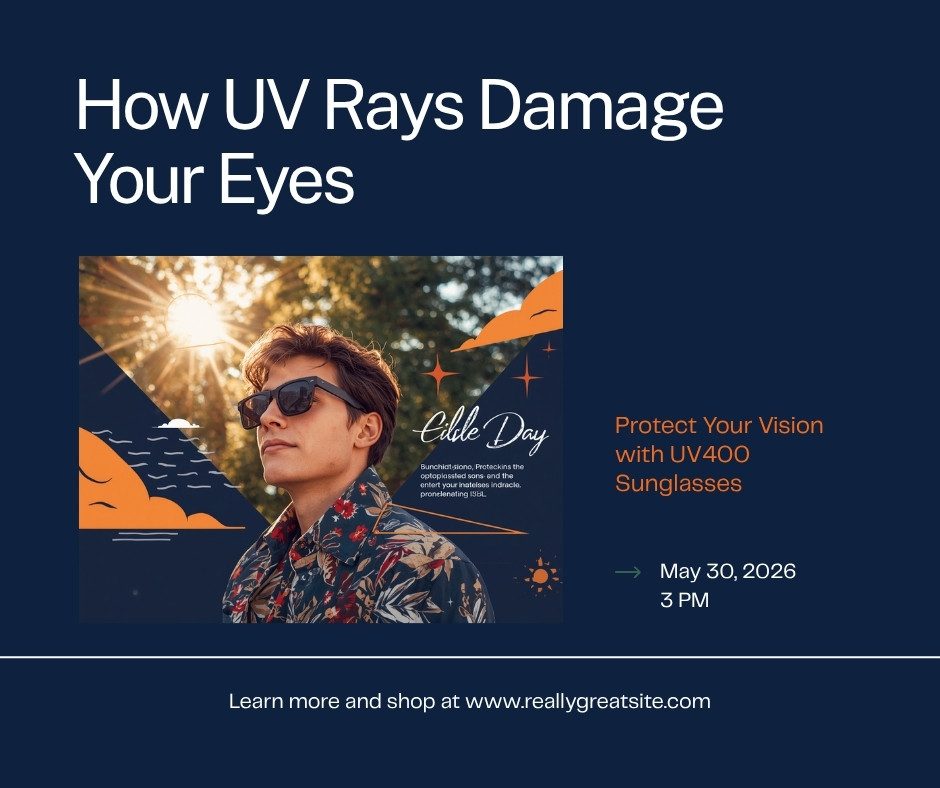
How UV Rays Damage Your Eyes: Complete Guide to UV Eye Protection
Every time you step outside without sunglasses, your eyes are exposed to ultraviolet radiation from the sun. Unlike sunburn on your skin, UV damage to your eyes is painless and cumulative — you feel nothing while the harm builds up over years. By the time symptoms appear, significant and often irreversible damage may already have occurred.
In Bangladesh, where sunlight intensity is high year-round and outdoor exposure is unavoidable, understanding UV eye protection is not optional. It is one of the most important investments you can make for your long-term vision health.

What Are UV Rays and How Do They Reach Your Eyes?
Ultraviolet radiation is electromagnetic energy from the sun with wavelengths shorter than visible light (100–400 nanometers). Three types exist: UVC (100–280 nm), UVB (280–315 nm), and UVA (315–400 nm). UVC is almost entirely blocked by the atmosphere. UVB and UVA reach the Earth’s surface and penetrate your eyes.
UV exposure is not limited to sunny days. Up to 80% of UV radiation passes through clouds. Reflective surfaces dramatically amplify exposure — water reflects 25% of UV, white concrete reflects up to 20%, and dry sand reflects 15%. In a typical Bangladeshi street environment with concrete buildings, roads, and vehicle surfaces, your UV exposure is significantly higher than you might expect from the sky alone.
Four Ways UV Rays Damage Your Eyes
1. Cataracts: Cumulative UV exposure accelerates the clouding of the eye’s crystalline lens, causing cataracts. UV-induced cataracts develop earlier and progress faster than age-related ones. The World Health Organization estimates that UV exposure contributes to approximately 20% of cataract cases globally. Cataracts are the leading cause of blindness in Bangladesh.
2. Macular Degeneration: The macula — the central part of your retina responsible for sharp vision — is particularly vulnerable to oxidative stress caused by UV radiation. Age-related macular degeneration (AMD), which causes central vision loss, is strongly associated with lifetime UV exposure. Once the macula degenerates, there is no cure.
3. Pterygium: This is an abnormal growth of tissue on the white of the eye (conjunctiva) that can spread across the cornea, causing irritation, distorted vision, and in severe cases requiring surgical removal. Pterygium is significantly more common in people with high lifetime UV exposure — it is sometimes called “surfer’s eye” but affects anyone who spends significant time outdoors.
4. Photokeratitis: This is essentially a sunburn of the cornea — intensely painful, with symptoms including extreme light sensitivity, tearing, blurred vision, and a feeling of sand in the eye. It heals within 1–3 days but is completely preventable with proper UV-protective eyewear.

Understanding UV400: What the Rating Actually Means
When shopping for sunglasses, the most important specification is the UV protection rating. UV400 means the lenses block all light wavelengths up to 400 nanometers — which covers both the entire UVA and UVB spectrums. Any sunglasses labeled UV400 or “100% UV protection” provide complete UV blocking.
Common misconceptions: darker tint does not mean better UV protection. A dark grey lens without UV coating still allows UV radiation to pass through — and may actually worsen the situation because dilated pupils (caused by dark surroundings) let in more UV. The UV protection comes from a coating or lens material, not from the tint darkness. Always verify the UV400 specification, not just the lens color.
| UV Rating | Protection Level | What It Blocks | Recommended? |
|---|---|---|---|
| No rating / unlabeled | Unknown | Unknown — possibly nothing | No — avoid |
| UV380 | Partial | Blocks up to 380nm | Acceptable minimum |
| UV400 | Complete | Blocks all UV up to 400nm | Yes — recommended |
| Polarized + UV400 | Complete + glare reduction | All UV + horizontal glare | Best for outdoors |
Children and UV Damage: Why Protection Starts Young
Children are significantly more vulnerable to UV eye damage than adults. A child’s crystalline lens is more transparent than an adult’s, transmitting up to 70% more UV radiation to the retina. Additionally, since most cumulative UV damage occurs before age 18, protecting children’s eyes early has an outsized impact on their lifetime risk of cataracts and macular degeneration.
If your child spends time outdoors — at school, playing sports, or simply commuting — UV400 sunglasses or photochromic lenses that darken outdoors are essential. Make sun protection for eyes as routine as sunscreen application.
Sunglasses That Actually Protect vs. Fake Sunglasses
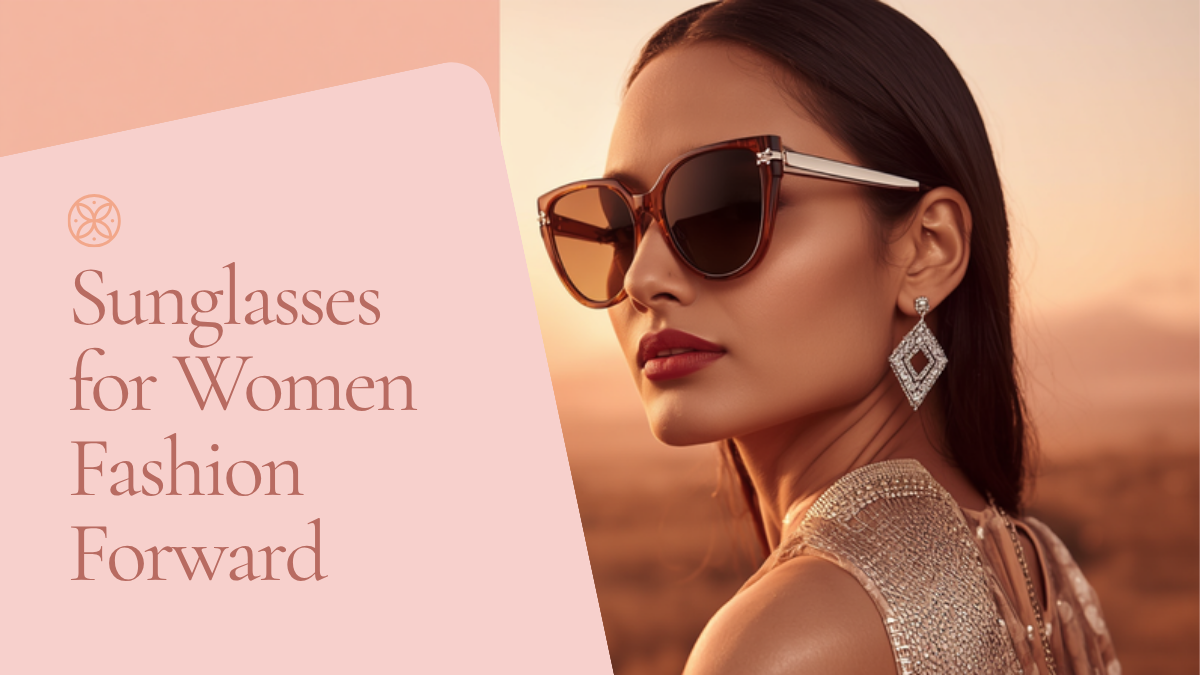
Bangladesh’s market is flooded with cheap sunglasses at BDT 100–300 that offer no real UV protection. These are aesthetically similar to proper sunglasses but provide zero UV filtering — and as noted above, may be worse than wearing nothing due to pupil dilation. Identifying proper sunglasses requires checking for a UV400 or “100% UV protection” label from a verified manufacturer.
At Nine Optic, every pair of sunglasses in our collection comes with verified UV400 protection. We do not stock decorative lenses masquerading as protective eyewear. Our prescription sunglasses combine UV protection with your correct vision correction, eliminating the need to choose between seeing clearly and protecting your eyes.

When Are UV Levels Highest in Bangladesh?
UV Index in Bangladesh regularly reaches 10–12 (Very High to Extreme) during peak hours. UV intensity is highest between 10 AM and 2 PM when the sun is at its highest angle. The UV Index varies by season: highest in March–May (pre-monsoon) and October–November (post-monsoon), moderate during the monsoon itself despite cloud cover. At the UV levels typical of Bangladeshi summer, unprotected eyes receive dangerous radiation in as little as 15–20 minutes of midday exposure.
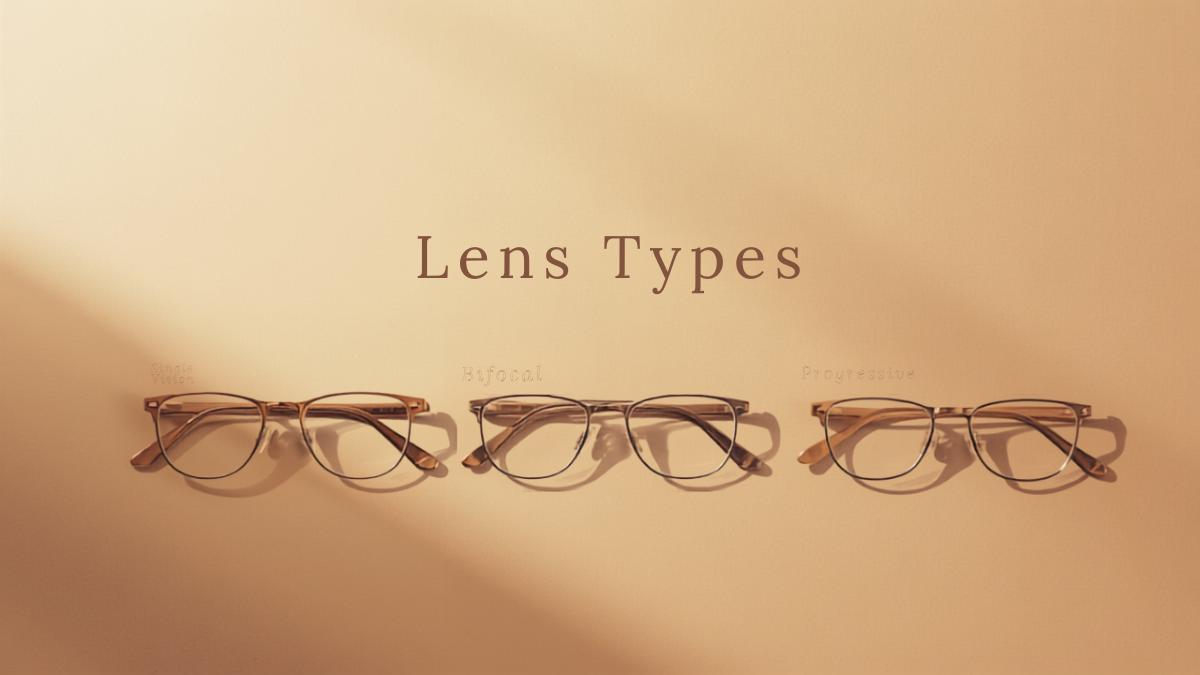
Lens Types for UV Protection
Standard prescription sunglasses with UV400 coating provide solid outdoor protection. Polarized UV400 sunglasses add horizontal glare reduction — ideal for driving, water activities, and bright concrete environments. Photochromic lenses (Transitions-style) adapt from clear indoors to dark outdoors — a practical choice for people who move frequently between indoor and outdoor environments.
Wrap-around frames provide superior UV protection by blocking UV from the sides, where standard frames leave gaps. For high-UV environments or outdoor workers, wrap-around UV400 sunglasses significantly outperform standard-frame designs.
Do Regular Prescription Glasses Protect Against UV?
Standard clear prescription lenses typically block some UV, but not completely. Most plastic (CR-39) lenses block moderate amounts of UVB but less UVA. Polycarbonate and Trivex lenses inherently block more UV due to their material properties. However, for complete UV400 protection outdoors, a UV coating or UV-blocking material specification is necessary — and this should be confirmed with your lens provider rather than assumed.
All Nine Optic prescription lenses can be fitted with UV400 treatment. For regular outdoor exposure, we strongly recommend upgrading to photochromic lenses that provide clear vision indoors with full UV400 darkening protection outdoors.
Frequently Asked Questions
Do cheap sunglasses protect against UV rays?
Not reliably. Unlabeled or cheap sunglasses often have no UV coating and may actually harm your eyes by dilating your pupils without providing UV protection. Always buy UV400-certified sunglasses.
Can UV damage to eyes be reversed?
Most UV eye damage is irreversible. Cataracts can be surgically removed, but macular degeneration and corneal damage from long-term exposure cannot be undone. Prevention is the only effective strategy.
Are cloudy days safe without sunglasses?
No. Up to 80% of UV radiation penetrates cloud cover. UV exposure on overcast days can still be significant enough to cause cumulative damage over time.
What is the difference between UV400 and polarized sunglasses?
UV400 refers to UV blocking up to 400nm — it addresses radiation damage. Polarized refers to blocking reflected horizontal glare — it improves visual comfort and reduces glare. The best sunglasses are both UV400 and polarized.
Can I get prescription sunglasses in Bangladesh?
Yes. Nine Optic offers prescription sunglasses with UV400 protection in a wide range of frame styles. You can upload your prescription and order online, or visit our location in Uttara, Dhaka.
How much do UV400 sunglasses cost in Bangladesh?
At Nine Optic, UV400 sunglasses start from BDT 1,500 for non-prescription styles. Prescription sunglasses with UV400 start from BDT 3,000 depending on frame and lens choice.
Do children need UV protection glasses?
Absolutely. Children’s eyes transmit significantly more UV to the retina than adult eyes. Starting UV protection in childhood dramatically reduces lifetime cataract and macular degeneration risk.
What lens tint is best for UV protection outdoors in Bangladesh?
Grey or brown tints with UV400 coating work well. Grey preserves natural color perception; brown enhances contrast in bright conditions. Tint darkness does not determine UV protection — always verify the UV400 rating regardless of tint color.
Share This Story, Choose Your Platform!
About the author : Dr. Salma Akter

Eye Specialist, Renevo Eye Hospital, Dhaka