Best Glasses for Kids & Smart Screen-Time Rules (শিশুদের চশমা)
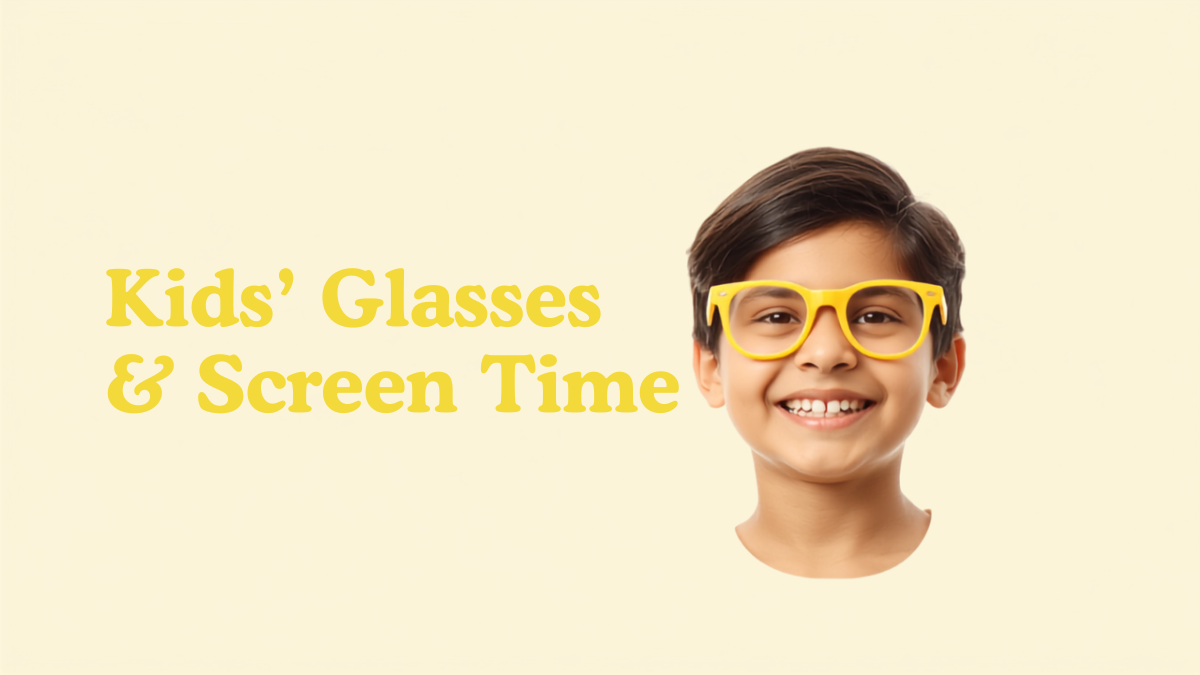
Children today spend more time on screens than any generation before them — phones, tablets, online classes, and TV. As a parent, it’s natural to worry: is all this hurting my child’s eyes, and do they need glasses? The good news is that with a few smart habits and the right eyewear, you can protect your child’s vision. Here’s a simple guide to kids’ glasses and screen-time rules — শিশুদের চশমা ও স্ক্রিন টাইম.
How screens affect children’s eyes
Long hours up close on a screen make the eyes work hard and blink less, leading to tired, dry eyes and headaches. More importantly, too much close-up time and too little daylight are linked to faster-rising eye power (myopia) in children — a growing concern in Bangladesh. Screens don’t cause permanent damage, but habits formed now shape a child’s eyes for years.
Safe screen-time rules by age (বয়স অনুযায়ী)
| Age | Recommended screen time |
|---|---|
| Under 2 years | Avoid screens (except video calls) |
| 2–5 years | Up to 1 hour a day, supervised |
| 6–12 years | Balanced limits; breaks every 30 minutes |
| Teens | Consistent limits, no screens before bed |
What to look for in kids’ glasses
Children are tough on their glasses, so choose frames built for real life:
- Durable, flexible frames that bend without snapping.
- Impact-resistant polycarbonate lenses — lighter and far safer than glass.
- A proper fit that sits level and doesn’t slide down.
- Lightweight materials for all-day comfort.
- An optional blue-cut coating for children who study on screens (see glasses for online classes).
Signs your child may need glasses
Children rarely say “my vision is blurry” — they simply adapt. Watch for these clues:
- Sitting very close to the TV or holding books near the face
- Squinting, tilting the head, or rubbing the eyes often
- Frequent headaches or tired eyes after study
- Losing place while reading, or slipping grades at school
বাংলায়: শিশু যদি টিভির খুব কাছে বসে, বারবার চোখ কচলায় বা মাথাব্যথার কথা বলে — তাহলে তার চোখ পরীক্ষা করানো জরুরি। শিশুরা সাধারণত নিজে থেকে ঝাপসা দেখার কথা বলে না।
Simple habits to protect kids’ eyes
- The 20-20-20 rule — every 20 minutes of screen time, look 20 feet away for 20 seconds (great for digital eye strain).
- 1–2 hours of outdoor play daily — one of the best-proven ways to slow myopia.
- Good lighting for study, and no screens in a dark room.
- No screens right before bed.
- Regular eye tests — see how often in our eye exam guide.
Worried about your child’s eyes? Start with an eye test, then pick comfortable, durable frames. Nine Optic’s free home try-on lets your child try frames at home, with cash on delivery.
Frequently Asked Questions
How much screen time is safe for children?
Under 2s should avoid screens apart from video calls; ages 2–5 about an hour a day; older children need balanced limits with regular breaks and no screens before bed.
Can too much screen time increase my child’s eye power?
Excessive close-up screen use and too little outdoor time are linked to faster-rising myopia in children. Breaks and daylight help slow it down.
Do children need blue-light glasses?
They aren’t essential, but a blue-cut coating can make long study sessions on screens more comfortable. Good habits matter just as much.
At what age can a child wear glasses?
Children can wear glasses at any age when needed, even as toddlers. Flexible frames and impact-resistant lenses make them safe and comfortable.
Share This Story, Choose Your Platform!
About the author : Dr. Saifur Rahman

Senior Consultant, Uttara Eye Hospital, Dhaka