Which Lens Is Best for Daily Use? CR39 vs Polycarbonate — Complete Guide
Which Lens Is Best for Daily Use? CR39 vs Polycarbonate vs High-Index — A Complete Guide for Bangladesh
When you visit an optical shop or order glasses online in Bangladesh, you’re often handed a prescription and asked: “Which lens do you want?” Most people have no idea what to say. They pick whatever is cheapest or whatever the shopkeeper recommends — often without understanding what they’re actually getting.
This guide breaks down the three most common lens materials available in Bangladesh — CR39 (standard plastic), polycarbonate, and high-index — so you can make an informed decision that protects your vision and your wallet.
What Is CR39 Lens?
CR39 (Columbia Resin 39) is the most widely used optical plastic in the world. It was developed in the 1940s and remains the standard because it’s affordable, optically excellent, and easy to apply coatings to.
CR39 Pros:
- Excellent optical clarity (very low chromatic aberration)
- Easy to tint and colour
- Most affordable lens material
- Works well with all standard coatings (anti-reflection, anti-scratch, blue-cut)
CR39 Cons:
- Thicker and heavier for high-power prescriptions
- Less impact-resistant than polycarbonate
- No built-in UV protection (needs a coating)
- Not recommended for powers above ±4.00
Best for: Low to moderate prescriptions (up to ±3.50), budget-conscious buyers, people with single-vision prescriptions who are sedentary.
What Is Polycarbonate Lens?
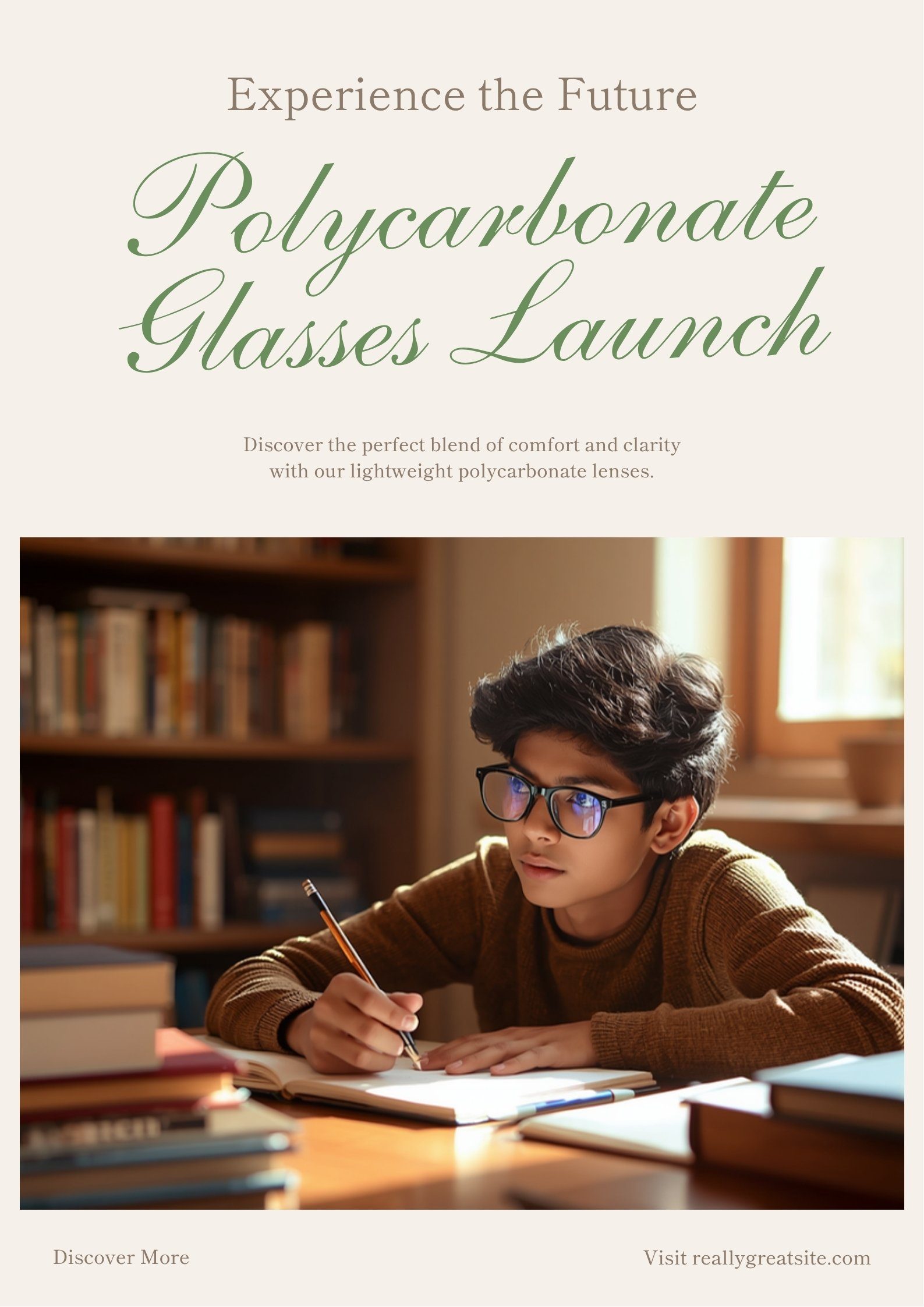
Polycarbonate is a thermoplastic material originally developed for aerospace applications and bulletproof glass. It entered the eyewear market in the 1970s and has become the recommended material for children, athletes, and anyone with an active lifestyle.
Polycarbonate Pros:
- Extremely impact-resistant (10× stronger than CR39)
- Built-in 100% UV400 protection
- Thinner and lighter than CR39 for the same prescription
- Refractive index of 1.586 — thinner than standard plastic
- Mandatory for rimless and semi-rimless frames
Polycarbonate Cons:
- Slightly lower optical clarity than CR39 (mild chromatic aberration)
- Scratches more easily (requires good anti-scratch coating)
- Slightly more expensive than CR39
Best for: Children (essential — standard CR39 can shatter), sports and active use, rimless and drill-mount frames, and anyone who wants UV protection built in.
What Is High-Index Lens?
High-index lenses are made from materials with a refractive index of 1.60, 1.67, or 1.74. The higher the index, the thinner the lens for the same prescription power. They’re the best solution for anyone with moderate to strong prescriptions (above ±4.00) who wants thin, light, cosmetically attractive glasses.
High-Index Pros:
- Significantly thinner and lighter than CR39 or polycarbonate
- No “coke bottle” look even at high powers
- Excellent for minus and plus powers above ±4.00
- Available with all premium coatings
High-Index Cons:
- More expensive (especially 1.74)
- Slightly more reflective — anti-reflection coating is essential
- Not as impact-resistant as polycarbonate
Best for: Anyone with powers above ±4.00, those wanting premium thin lenses, and high-fashion frame wearers who need cosmetically slim lenses.
CR39 vs Polycarbonate vs High-Index: Side-by-Side Comparison
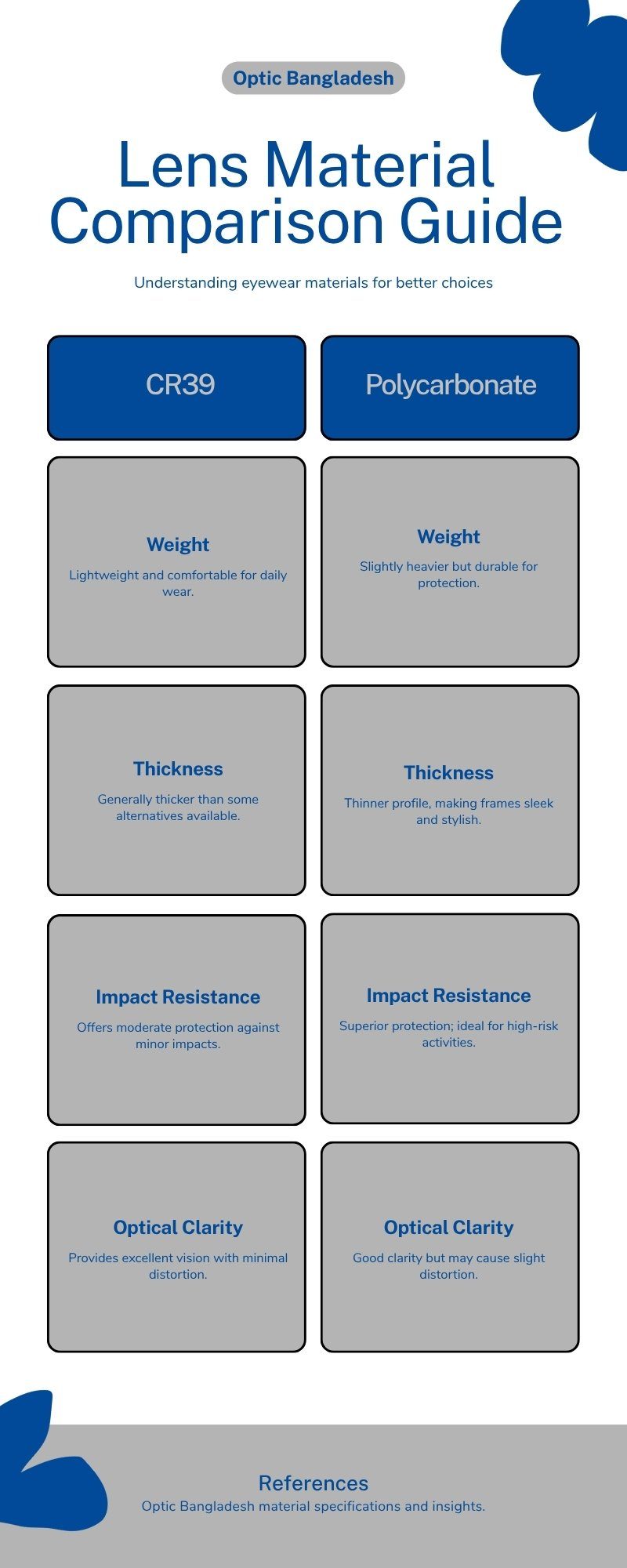
| Feature | CR39 | Polycarbonate | High-Index 1.67 |
|---|---|---|---|
| Optical Clarity | ⭐⭐⭐⭐⭐ | ⭐⭐⭐⭐ | ⭐⭐⭐⭐⭐ |
| Thickness | Standard | Thinner | Much Thinner |
| Impact Resistance | Moderate | Excellent | Moderate |
| UV Protection | Coating needed | Built-in UV400 | Built-in UV400 |
| Price (BD) | Most affordable | Mid-range | Premium |
| Best Power Range | Up to ±3.50 | Up to ±4.00 | ±4.00 and above |
Which Lens Is Best for Daily Use in Bangladesh?
For most adult Bangladeshis with moderate prescriptions (up to ±3.00) who work in offices and use screens daily:
- CR39 with anti-reflection + blue-cut coating is the most cost-effective choice
- Add anti-scratch coating as Bangladesh’s dusty environment is hard on lenses
For children, outdoor workers, or anyone with an active lifestyle:
- Polycarbonate with anti-reflection and anti-scratch — the safety and UV benefits are worth the extra cost
For high-power prescriptions (±4.00 and above):
- 1.67 high-index with anti-reflection coating — you’ll look dramatically better and your glasses will be far more comfortable to wear
🔬 Not Sure Which Lens Is Right for You?
Share your prescription with Nine Optic’s optical team and we’ll recommend the exact lens material and coating combination for your eyes and lifestyle — for free.
Frequently Asked Questions
Is CR39 or polycarbonate better for daily use in Bangladesh?
For most adults with low to moderate prescriptions, CR39 with anti-reflection and blue-cut coating is the best value for daily use. For children, active users, or rimless frames, polycarbonate is the better choice due to its superior impact resistance and built-in UV protection.
What lens should I choose for power above -5.00 in Bangladesh?
For prescriptions above -5.00 (or +4.00), choose 1.67 or 1.74 high-index lenses. These will be significantly thinner and lighter than CR39 or polycarbonate, making your glasses far more comfortable and cosmetically appealing. Anti-reflection coating is essential with high-index lenses.
Do polycarbonate lenses scratch easily?
Yes, polycarbonate is softer than CR39 and scratches more easily. Always get a quality anti-scratch coating with polycarbonate lenses. Nine Optic includes anti-scratch coating as standard on all polycarbonate lenses.
Share This Story, Choose Your Platform!
About the author : Rebeka Sultana

Senior Optometrist, Nine Optic