
What Is Pupillary Distance (PD)?
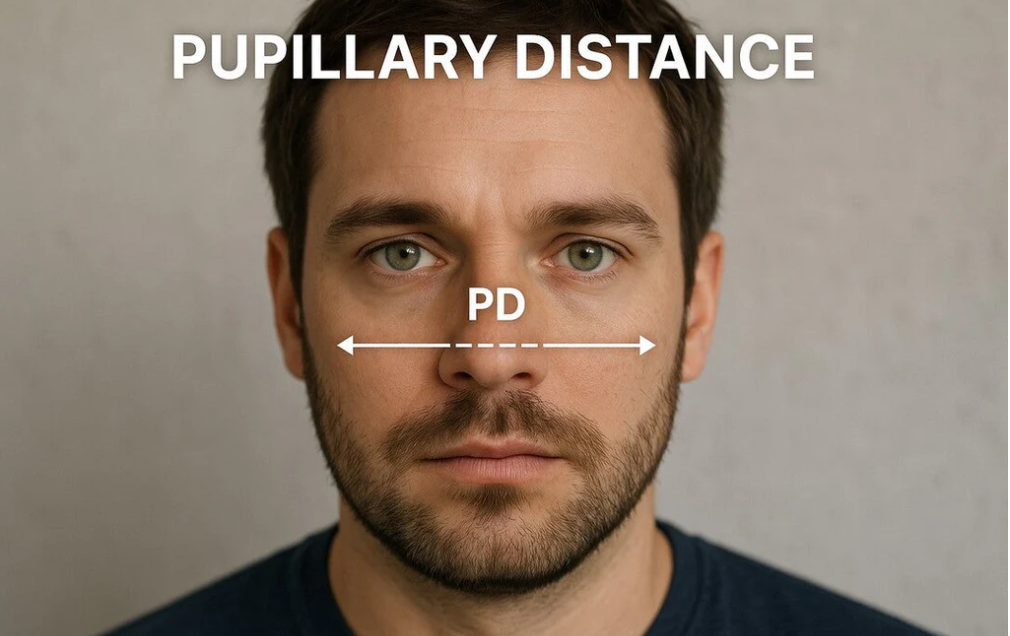
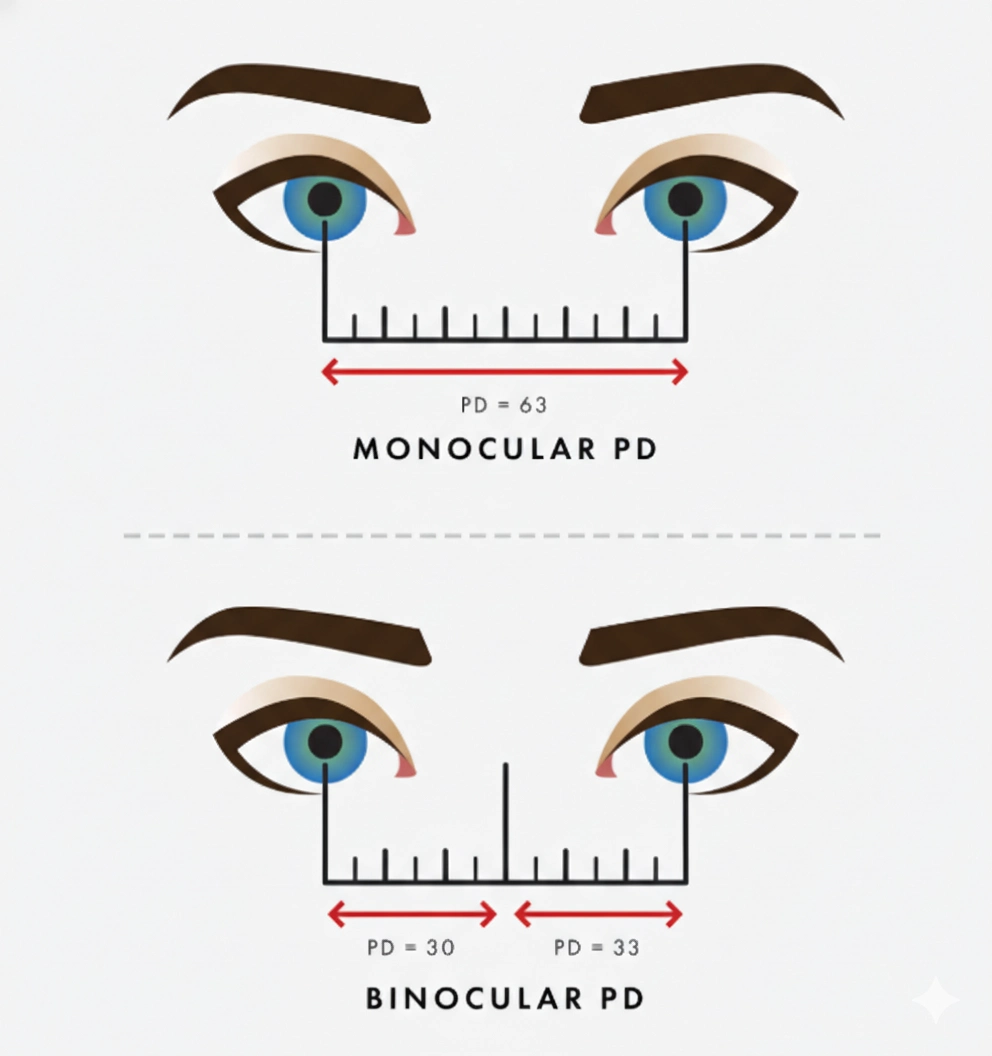
Pupillary Distance (PD), also called interpupillary distance, is the measurement in millimeters between the center of your pupils. This number helps ensure your lenses are aligned correctly so you’re looking through the optical center of each lens — which means clearer, more comfortable vision.
If your eye care professional didn’t include PD on your prescription, you can measure it yourself at home.
Why PD Matters
A correct PD ensures:
- Sharper vision through your glasses
- Lens optics align with your eyes
- Reduced eyestrain, distortion, or discomfort
Without accurate PD, your glasses might not work as well — especially if you have a strong prescription.
Tools You’ll Need
To measure your PD at home:
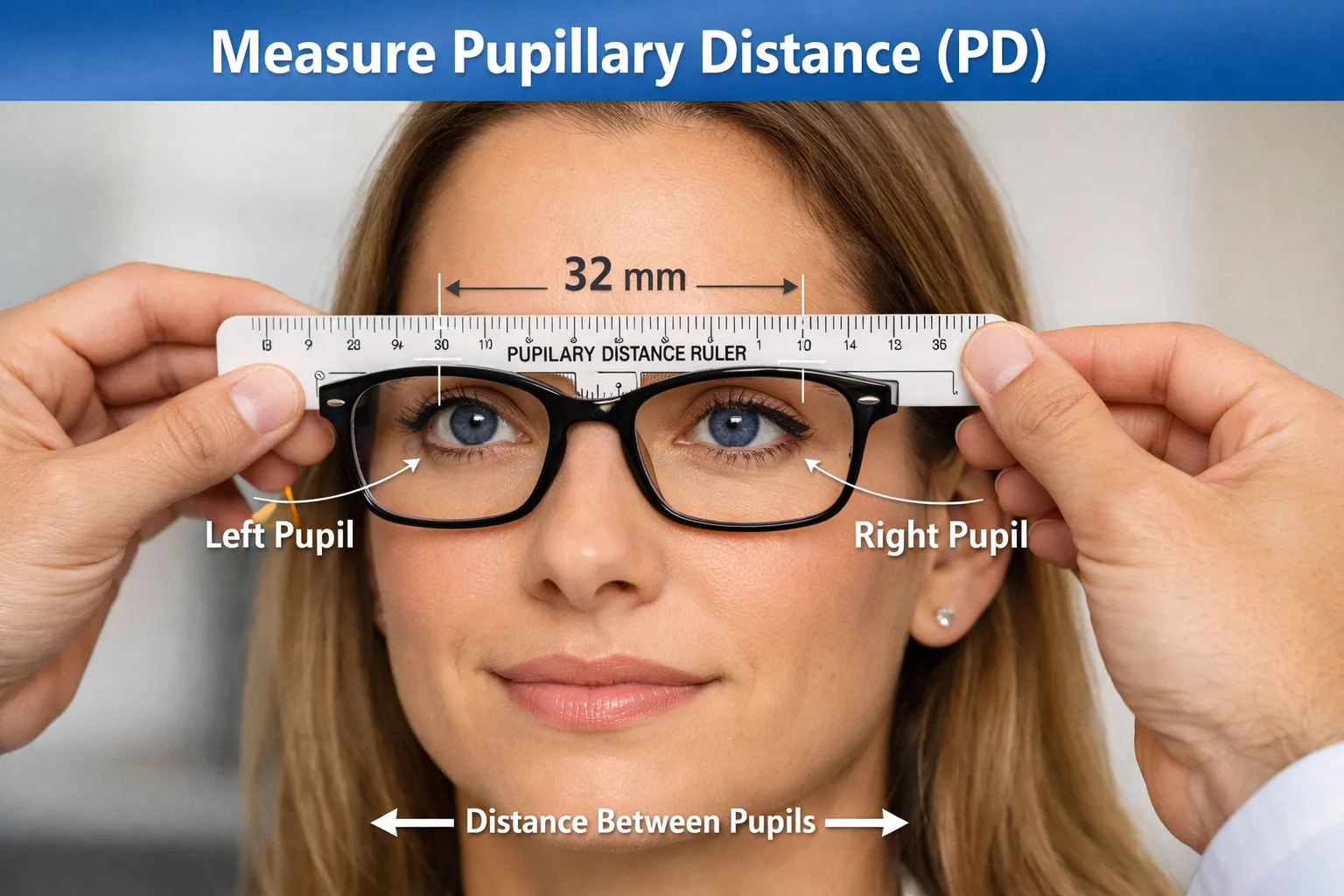
- A PD ruler or millimeter ruler
- A mirror (if measuring yourself)
- A friend to help (even better for accuracy)
How to Measure Pupillary Distance (PD)
To order prescription glasses online, you’ll need your Pupillary Distance (PD). If your prescription doesn’t list it, no stress — you can easily measure your PD at home using a mirror and a printable ruler. With just a few simple steps, you’ll have the accurate measurement needed for perfectly centered lenses.
Whether you’re ordering glasses online for the first time or just wondering “What is my PD?”, this guide will walk you through everything you need to know.
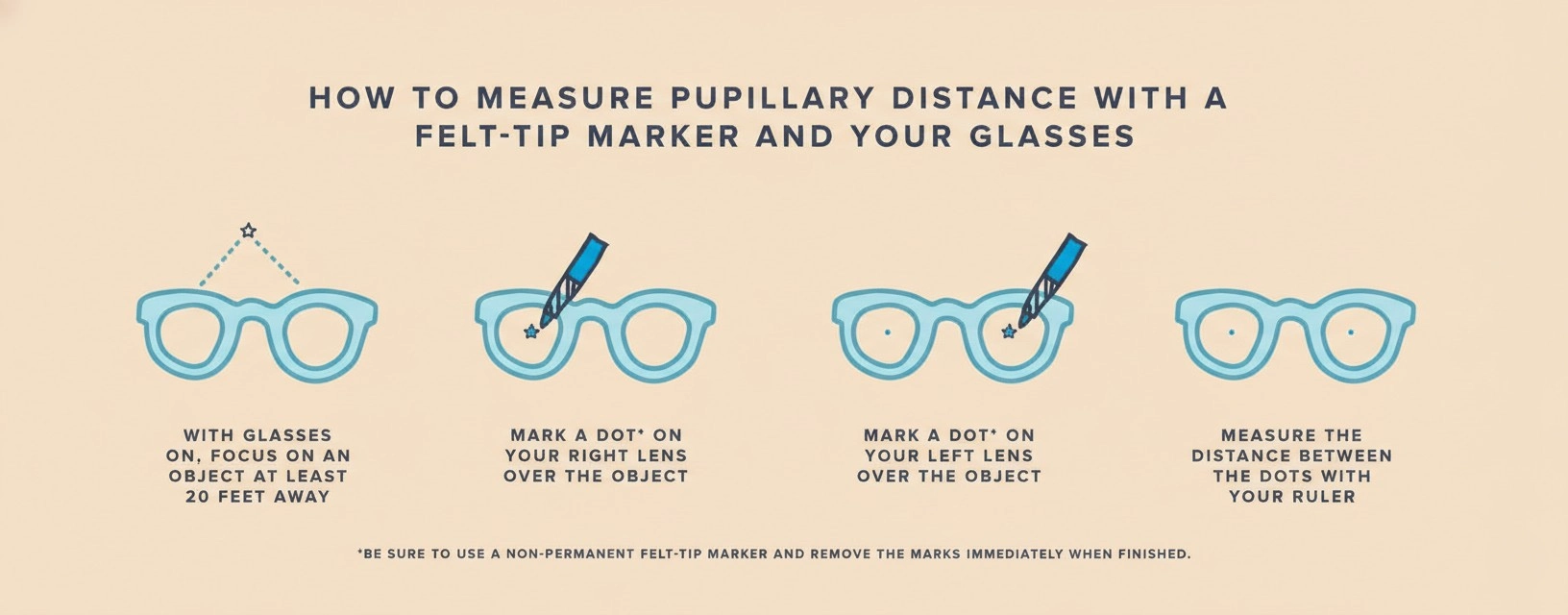
How to Measure Your PD (With a Friend)
If someone is helping you measure your PD, follow these steps:
- Fold the PD ruler to the side labeled “Using a Friend.”
- Sit comfortably and focus on an object about 10–20 feet away to keep your eyes steady.
- Have your friend place the ruler against your forehead.
- Align the zero mark with the center of your right pupil.
- Read the number that lines up with the center of your left pupil — that’s your PD.
For better accuracy, the person measuring can close one eye while reading the ruler.
How to Measure Your PD by Yourself
Measuring PD on your own is quick and easy with a mirror.
Steps to Measure PD Alone
- Fold the ruler and flip it to the side marked “Using a Mirror.”
- Stand about 8 inches away from a mirror.
- Hold the ruler horizontally and align the zero mark over the center of your left pupil.
- Close your left eye.
- The number above your right pupil is your PD.
For best results, repeat the process a few times and use the average measurement if the numbers vary slightly.
Measuring Near PD for Progressive or Bifocal Lenses
If you’re ordering progressive or bifocal lenses, you’ll also need your near PD. To measure near PD:
- Ask someone to help you.
- Focus on a pen held between you and the person measuring.
- While you focus on the pen, they should measure your PD using the same method as distance PD.
This ensures accurate vision for reading and close-up tasks.
How to Find PD on Your Glasses Prescription
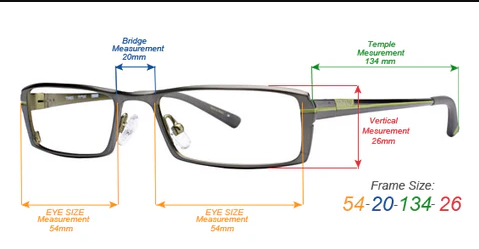
Your PD may already be listed on your prescription:
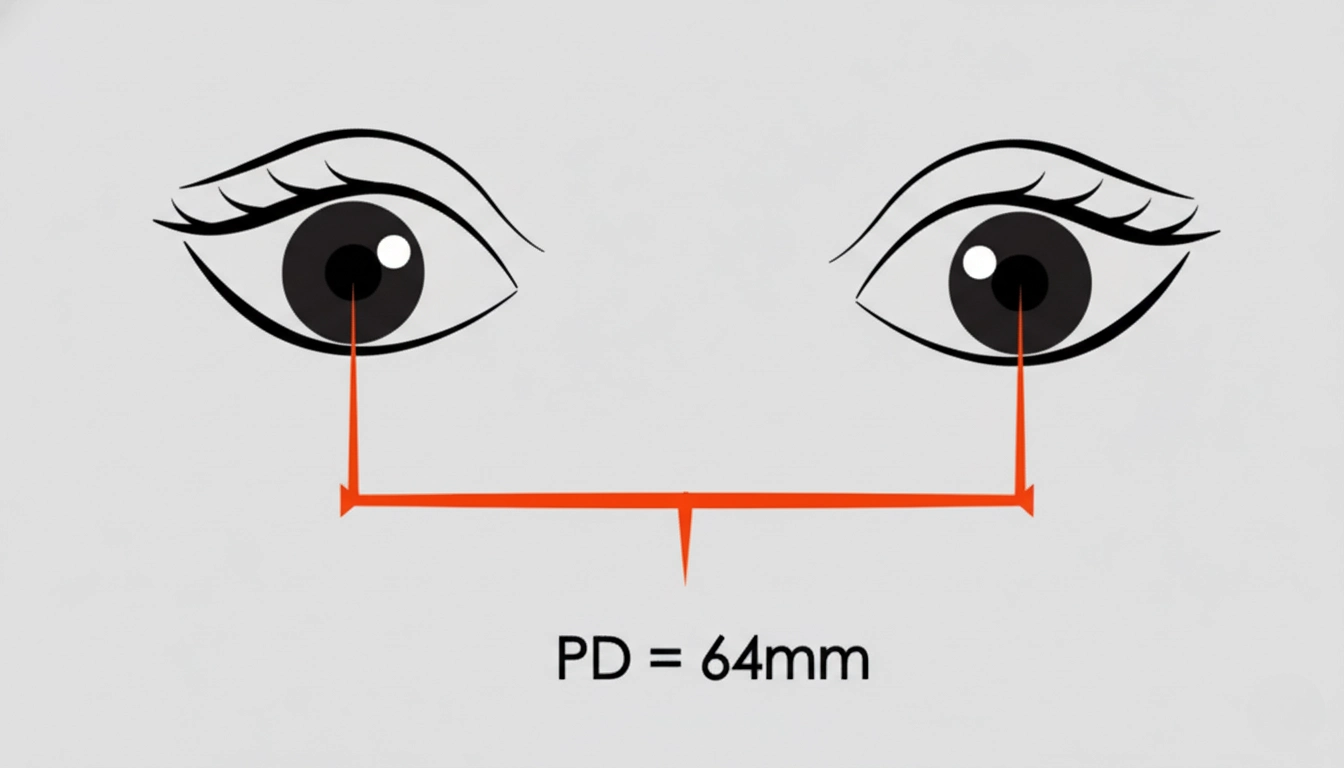
- Single PD: One number (example: 64 mm)
- Dual PD: Two numbers (example: 32 / 31), showing the distance from the bridge of your nose to each eye
Dual PD is often used for higher prescription accuracy.
Single PD vs. Dual PD
-
Single PD: One number (e.g., 62 mm) — total distance from one pupil to the other.
-
Dual PD: Two numbers (e.g., 31/31 mm) — measurement from each pupil to the bridge of the nose.
Doctors opt for dual PD when pupils aren’t centered symmetrically.
Average Pupillary Distance for Men and Women
PD varies from person to person, but typical ranges include:
- Average for women: around 60 mm
- Average for men: around 64 mm
- Common range: 48 mm to 73 mm
Remember, these are averages — your exact PD is unique to you.
Tips for Accurate Measurement
- Keep your head straight and look at a distant point if possible.
- Use good lighting so you can see pupil centers clearly.
- Write down your measurements each time and use the average.
- If you’re unsure, visit an eye care professional for a precise measurement.