
How to Read a Glasses Prescription
Understanding how to read a glasses prescription is essential when ordering eyeglasses online. Even if you know you’re nearsighted, farsighted, or have astigmatism, the numbers and terms on a prescription can be confusing. This quick guide helps you understand your eyeglass prescription so you can order the right glasses with confidence.
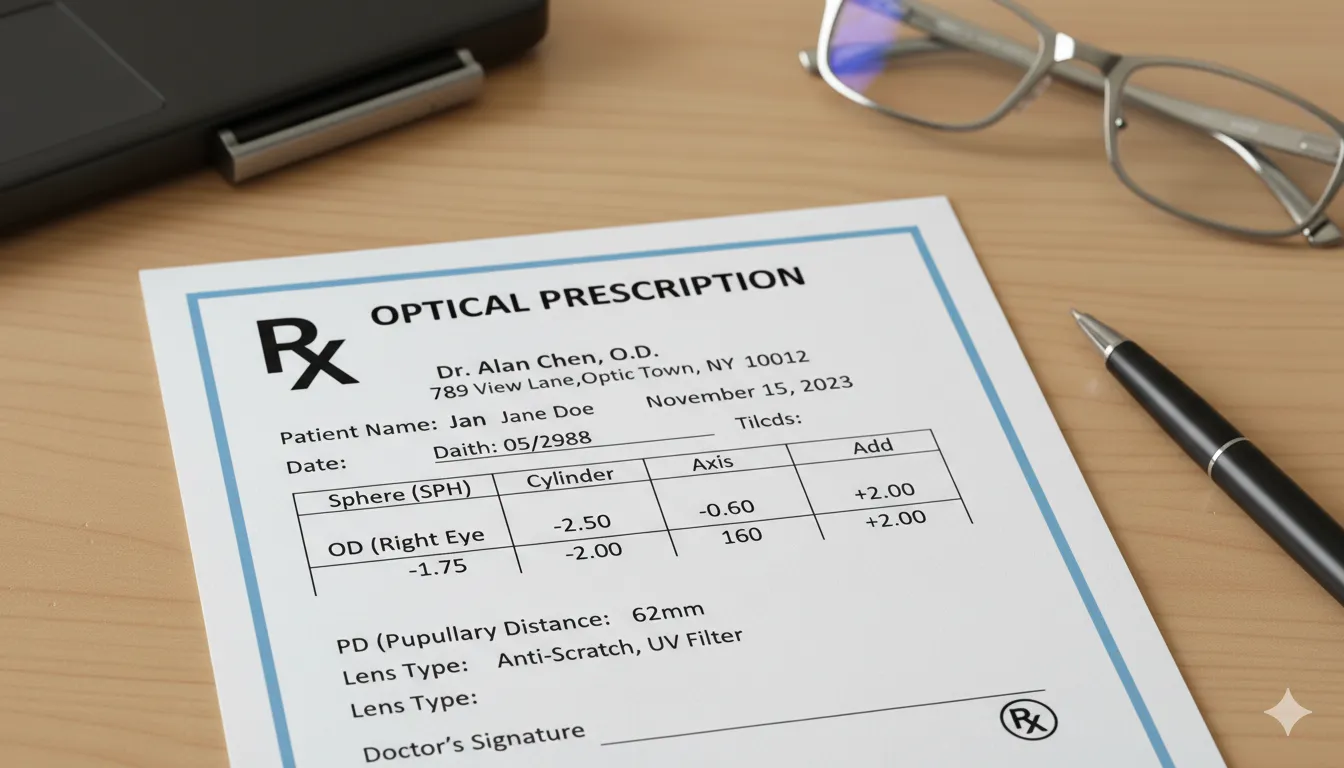
What Do the Letters and Numbers on a Glasses Prescription Mean?
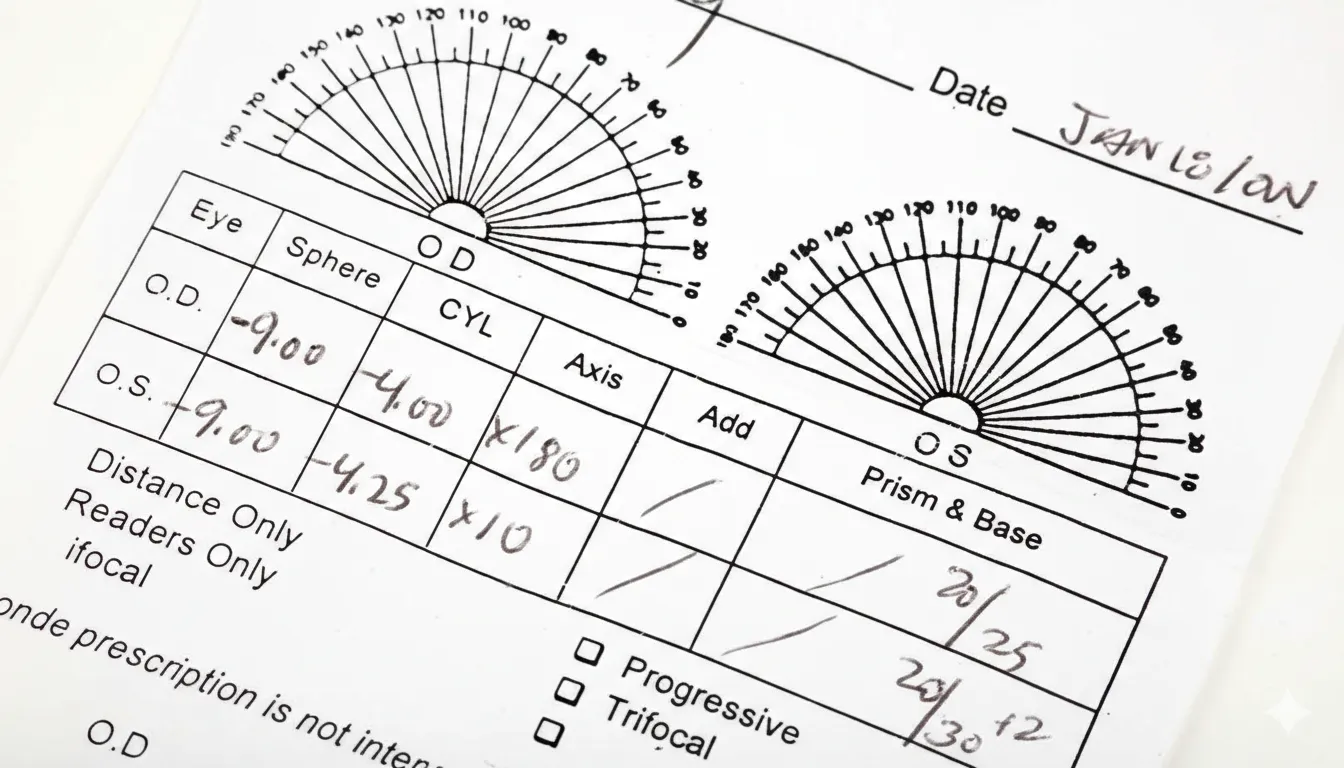
The letters and numbers on your eyeglass prescription describe exactly how your lenses should be made to correct your vision. These measurements guide how prescription lenses are cut and customized for your eyes, ensuring clear and comfortable vision.
To get the best results, it’s important to keep your prescription up to date so the values accurately reflect your current visual needs. Most glasses prescriptions include several abbreviations and terms that represent different aspects of your vision correction.
Below, you’ll find a clear explanation of common prescription terms such as SPH (Sphere), CYL (Cylinder), Axis, Prism, PD (Pupillary Distance), and more—so you can confidently understand your prescription and order glasses online with ease.
OD, OS, and OU Meaning on an Eyeglass Prescription
- OD (Oculus Dexter): Refers to the right eye on a glasses prescription.
- OS (Oculus Sinister): Indicates the left eye and its correction values.
- OU (Oculus Uterque): Means both eyes have the same prescription.
- These Latin terms are used by eye care professionals.
- Understanding them ensures accurate prescription entry and proper lens customization when ordering glasses online.
Sphere, Cylinder, and Axis on an Eye Prescription
- Sphere (SPH): Indicates the lens power needed for clear vision. A minus (-) value corrects nearsightedness (myopia), while a plus (+) value corrects farsightedness (hyperopia).
- Cylinder (CYL): Shows the amount of lens power required to correct astigmatism. If this field is blank or shows zero, astigmatism correction is not needed.
- Axis: Appears only when CYL is present. It measures the angle (0–180 degrees) that aligns the astigmatism correction on the lens.