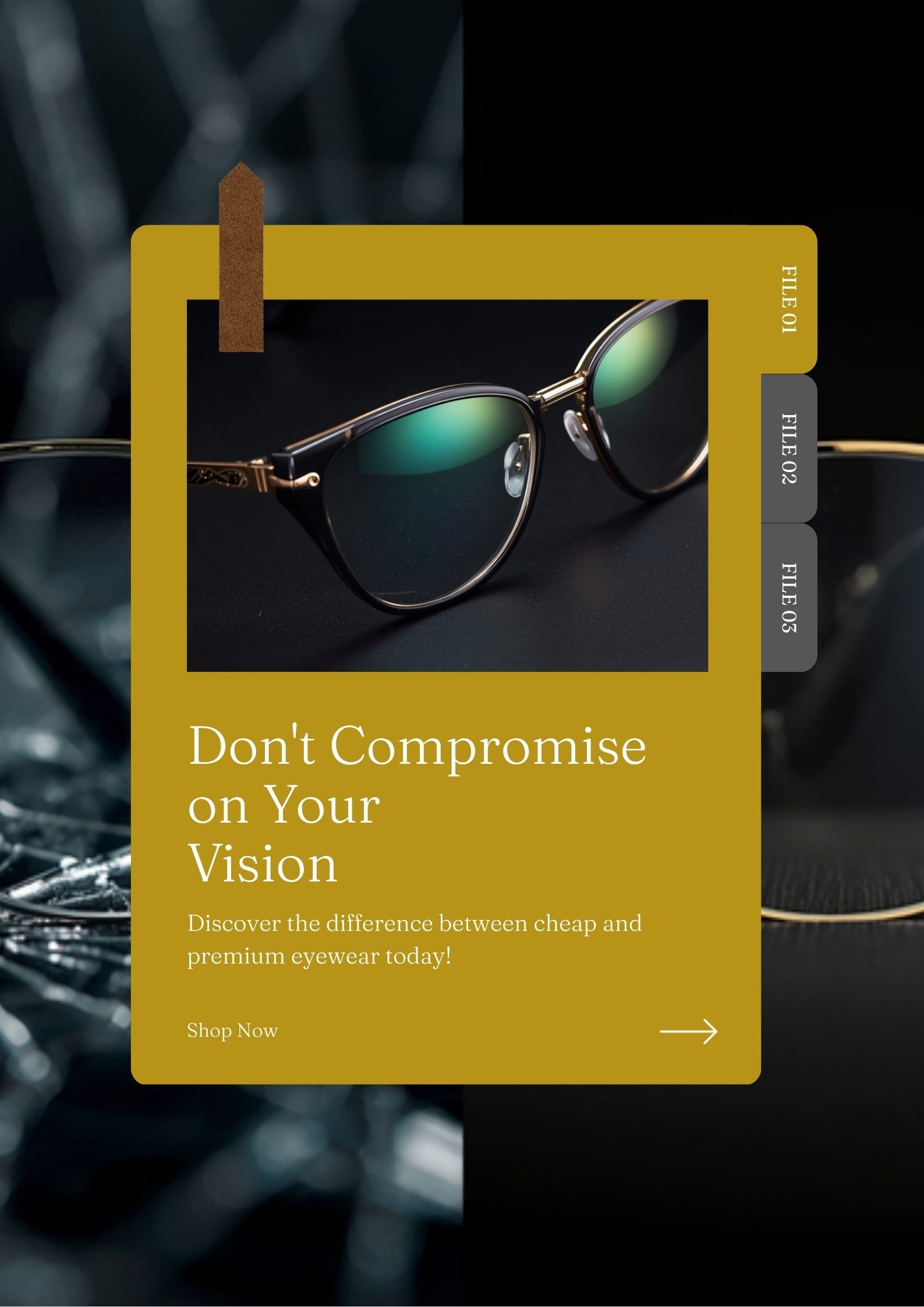
Cheap vs Premium Eyeglasses: What’s the Real Difference in Bangladesh?
Cheap vs Premium Eyeglasses: What’s the Real Difference in Bangladesh?
Walk into any Dhaka eyewear market — from Pallabi to Banani — and you’ll find glasses at every price point, from BDT 300 to BDT 15,000. The natural question is: are expensive glasses actually better, or are you just paying for a brand name?
The honest answer: price differences in eyeglasses reflect real differences in materials, optical quality, and long-term eye health outcomes. But not every expensive pair is worth it, and not every affordable pair is bad. This guide breaks down exactly what you get at each price tier so you can make the smartest decision for your budget and your eyes.
The Lens: Where the Real Difference Lies
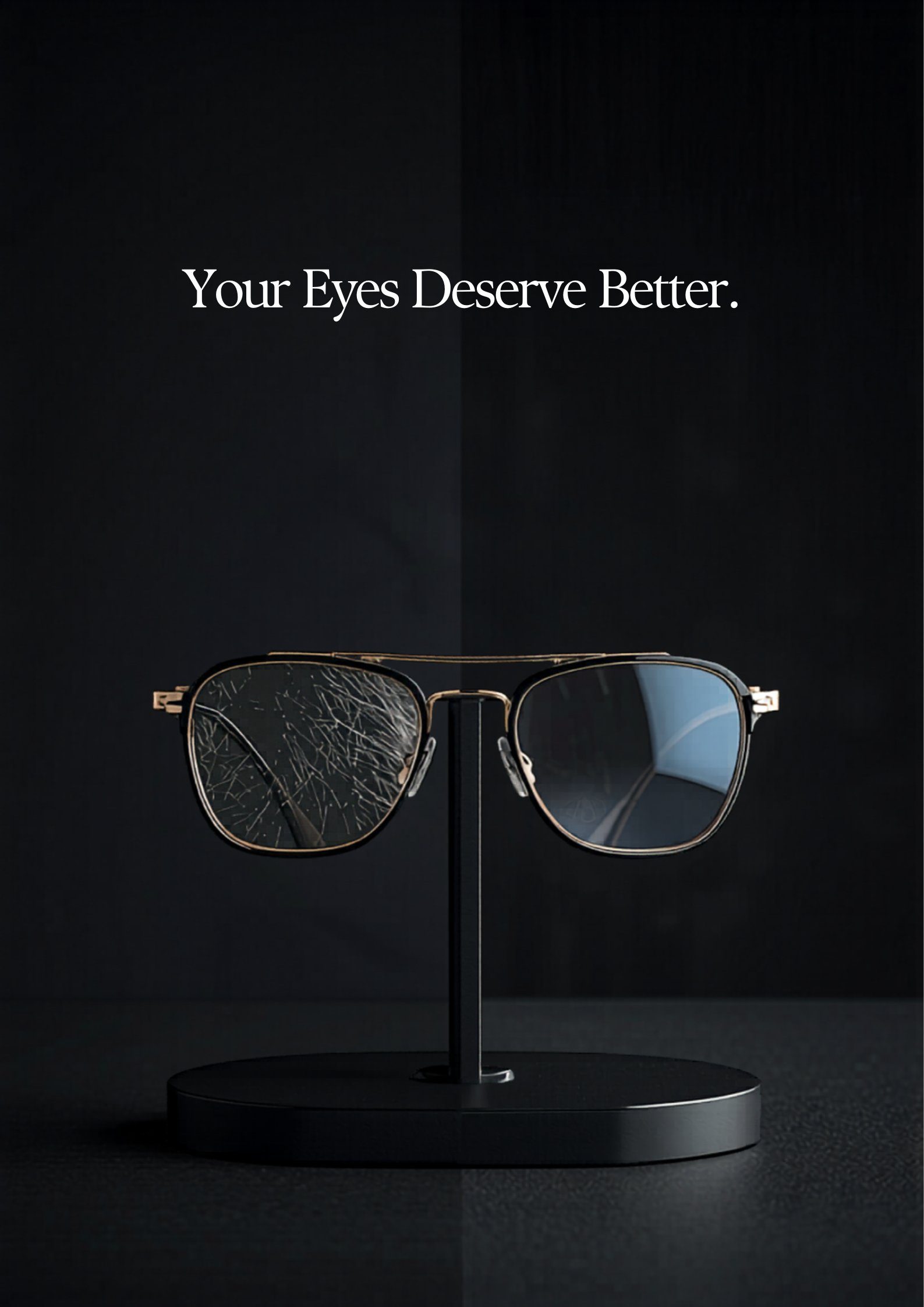
Frames are visible. Everyone notices them. But your lenses are what actually determine your visual experience, eye comfort, and long-term eye health. This is where the cheap vs premium difference is most dramatic — and most consequential.
Cheap Lens Problems in Bangladesh
Budget lenses sold in Bangladesh’s unregulated market frequently have:
- Incorrect refractive index for the stated power — the lens may not actually correct your vision properly
- High chromatic aberration — colours appear slightly distorted, causing eye strain
- No UV protection or a UV coating that degrades within weeks
- Fake anti-reflection coating — these lenses look greenish or yellowish but don’t actually reduce glare
- No anti-scratch coating — they scratch within days of use
- Power inaccuracy — many cheap labs in Bangladesh have no quality control, so the power in your lens may be off by ±0.25 to ±0.50 from your actual prescription
The consequence? Blurry vision, headaches, eye strain — and the belief that “glasses just don’t work for me” when the real problem is the lens quality.
What Premium Lenses Actually Include
Premium lenses from certified manufacturers (Essilor, Zeiss, Hoya, or equivalent) include:
- Precise power accuracy to within ±0.12 diopter
- Multi-layer anti-reflection coating that lasts 2–3 years
- Durable anti-scratch hardcoat
- Built-in UV400 protection
- Superior optical clarity with minimal aberration
- Optional blue-light filtering in the lens material itself (not just surface coating)
The Frame: Materials That Matter
Cheap Frame Materials
Budget frames in Bangladesh are usually made from low-grade acetate or cheap alloy metals. Common problems:
- Hinges bend or break within weeks to months
- Paint or coating chips off (especially at the nose bridge area)
- Screws loosen rapidly in Bangladesh’s humid climate
- Plastic becomes brittle and cracks
- Metal causes skin irritation or allergic reactions (nickel content)
Premium Frame Materials
Quality frames use acetate (Italian or Japanese), stainless steel, titanium, or beta-titanium. Benefits:
- Spring hinges that flex without breaking
- Hypoallergenic materials safe for all skin types
- Resistant to Bangladesh’s heat and humidity
- Maintain their shape and colour for 2–5 years with normal care
- More comfortable fit due to better weight distribution
Coatings: The Invisible Upgrade
Anti-reflection (AR) coating is the single most impactful upgrade you can make to any pair of glasses. It eliminates the reflections on the front and back of your lens, resulting in sharper vision and reduced eye strain, especially at night and in artificial lighting.
Cheap AR coatings peel, craze (crack in a web pattern), or lose effectiveness within 6–12 months in Bangladesh’s climate. Quality multi-layer AR coatings from proper manufacturers last 2–3 years before needing replacement.
Total Cost of Ownership: The Real Calculation
Many Bangladeshis buy cheap glasses thinking they’re saving money. But consider the real math:
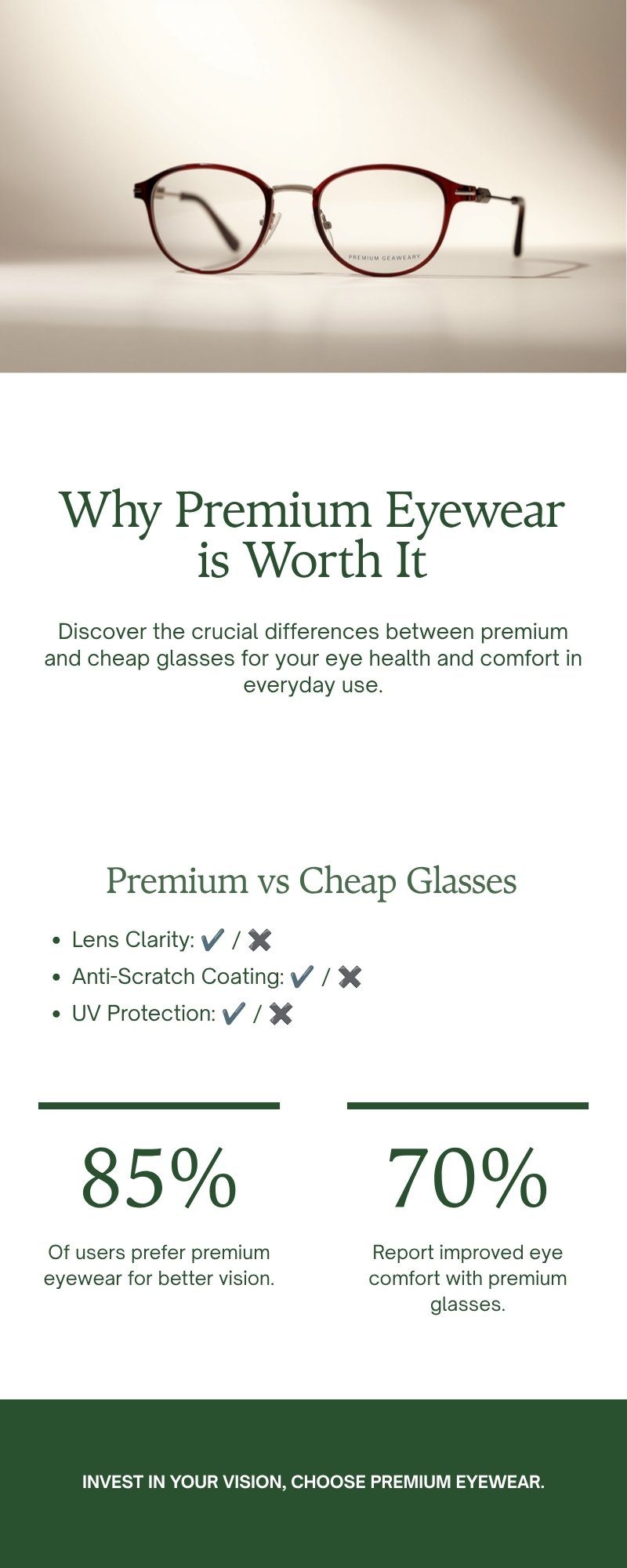
| Factor | BDT 500 Cheap Glasses | BDT 2,500 Nine Optic Glasses |
|---|---|---|
| Useful lifespan | 3–6 months | 2–3 years |
| Cost over 3 years | BDT 3,000–6,000 | BDT 2,500 |
| Eye strain | High (poor clarity) | Low (AR coating) |
| Power accuracy | ±0.50 variance | ±0.12 precision |
| UV protection | Unreliable | Certified UV400 |
| Warranty | None | Yes |
Where Nine Optic Sits in This Spectrum
Nine Optic was founded with a specific mission: to provide premium-quality eyewear at honest prices — eliminating the 200–300% mark-up that traditional optical shops in Bangladesh charge.
Our lenses come from certified manufacturers. Every pair includes proper anti-reflection coating, anti-scratch hardcoat, and UV400 protection as standard. Our frames are made from quality acetate or metal alloys that are built to last Bangladesh’s climate.
The result? You get premium quality at close to mid-range prices — often 40–60% less than what you’d pay at a traditional optical shop for the same lens quality.
When Cheap Glasses Are Actually Fine
To be fair: there are situations where budget eyewear is perfectly acceptable:
- Reading glasses for very low powers (+1.00 to +1.50) used occasionally — the optical demands are minimal
- Spare glasses for emergencies when your main pair is being repaired
- Non-prescription fashion glasses with no vision correction needs
- Sunglasses for casual use — though UV protection should still be verified
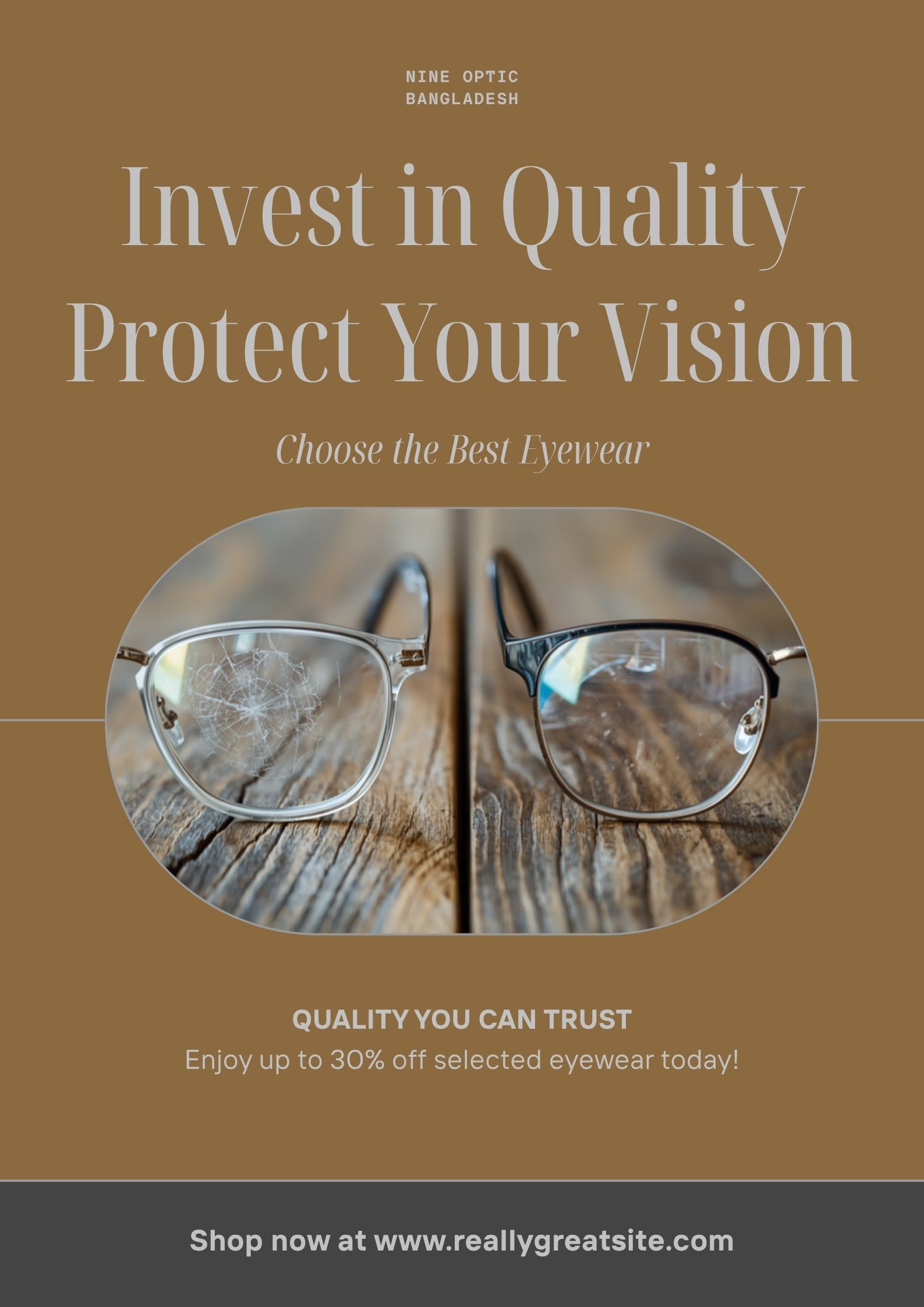
For any pair you’ll wear daily with a real prescription, invest in quality. Your eyes are not replaceable.
💎 Premium Quality. Honest Prices. That’s Nine Optic.
Get certified lenses with AR coating, anti-scratch hardcoat, and UV400 protection — starting from BDT 1,500. No hidden costs, no compromises.
Also try our Home Trial Service — test 5 frames at home for free before committing.
Frequently Asked Questions
Are cheap glasses harmful to your eyes in Bangladesh?
Cheap glasses with incorrect prescription power or poor optical quality can cause eye strain, headaches, and in the long run, contribute to faster progression of myopia in children. They may not cause permanent damage in most cases, but they certainly don’t help your eyes and may worsen your daily comfort significantly.
What is the minimum price for good quality prescription glasses in Bangladesh?
A pair of quality prescription glasses with proper anti-reflection coating, UV protection, and accurate power starts from around BDT 1,500–2,000 at Nine Optic. Traditional optical shops charge BDT 3,000–8,000 for the same quality level due to higher overhead costs.
How can I tell if a lens has a genuine anti-reflection coating?
Genuine AR-coated lenses have a faint green or blue residual reflection when held under light. If the lens shows a strong white or yellow reflection, the coating is either absent or very low quality. You can also check: if your reflection in the lens is very visible and bright, the AR coating is not working effectively.
Why do optical shops in Bangladesh charge so much more than online stores?
Traditional optical shops in Bangladesh have high rent (especially in Dhaka), staff costs, and often add 200–300% mark-up on frames and lenses. Online stores like Nine Optic eliminate these overheads and pass the savings directly to customers, without compromising on lens quality.
Share This Story, Choose Your Platform!
About the author : Khurshid Zaman

Optician, Nine Optic